
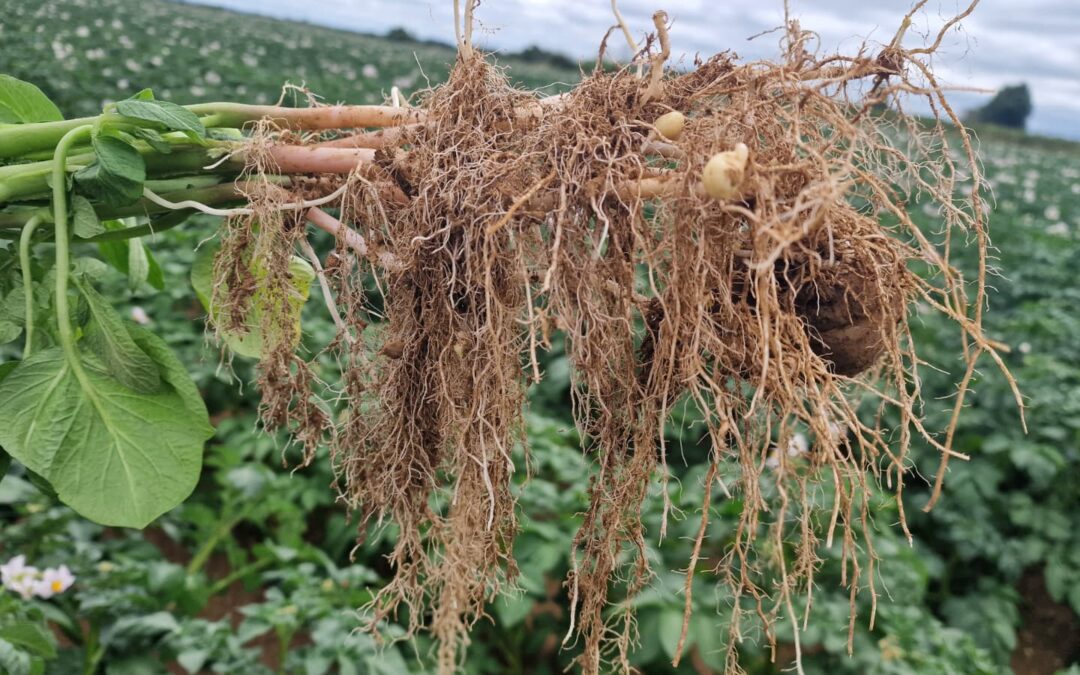
Reasons to Use Microbes in Potato Crops
Soil microbes play an important role in helping potato crops establish strong roots, access nutrients and cope with stress. In dry seasons, when irrigation is limited and soil moisture is under pressure, a better-developed root system can make a real difference to crop resilience.
Microbes for potato crops are not just about soil health in the long term. Used at planting, microbial biostimulants can help support early root development, improve soil structure around the seed tuber and encourage a more active root zone from the start of the season.
Recent dry conditions and irrigation restrictions have shown why root depth, rooting density and soil structure matter. Crops with stronger roots are better placed to search for moisture and access macro and micronutrients during key stages of growth.
Why Root Development Matters in Dry Seasons
How the weather in any given season is likely to behave is anyone’s guess at the time of planting, but what happens at planting can determine the crop’s ability to withstand the harshest weather – dry, hot or cold.
Microbes at Planting Support Potato Establishment
Planting is the opportunity to support the seed potato as it establishes its first root system. A more active root zone can help the crop explore the soil more effectively, making better use of available moisture, air and nutrients.
Research has repeatedly demonstrated the benefits of adding microbial spores at planting to support and reinvigorate the soil’s natural microbial communities. These communities can be compromised by over-cultivation, short rotations and repeated use of fertilisers, fungicides, nematicides and insecticides.
How Soil Microbes Improve Root Growth and Soil Structure
Soil microbes produce extracellular polymeric substances, often referred to as EPS. These are sticky, gel-like compounds made from sugars, proteins and other biochemicals. They help bind soil particles into aggregates, improving soil structure, aeration, water infiltration and water retention.
Better soil structure allows roots to grow more freely through the soil profile. In a dry season, this can help crops access small pockets of remaining soil moisture and air, supporting establishment and resilience.
The Relationship Between Roots and Soil Microbes
There is a two-way relationship between roots and microbes. Some microbes release growth-supporting compounds such as auxins and cytokinins, which can stimulate root development. In return, roots release exudates that feed soil microbes in the rhizosphere.
This relationship helps create a more active root zone. As root growth increases, microbial activity is also supported, which can contribute to nutrient cycling, soil aggregation and longer-term soil health.
The Role of Microbes in Organic Matter Breakdown
Microbes contribute to the breakdown of organic matter, including crop residues and manures, turning them into humus. This helps build long-term soil fertility, improve soil structure and support carbon storage.
For potato growers, this is important because healthy soil biology underpins the crop’s ability to access nutrients and moisture throughout the season.
Support Stronger Roots from Planting
A strong start can help potato crops cope better with dry, hot or stressful conditions later in the season. Symposium microbial biostimulant introduces beneficial rhizobacteria, fungi and organic biostimulants at planting to support root development and microbial activity in the root zone.
Related Reading:
Symposium Launched as Emerald Research Rebrands Consortium-Plus
Why Microbial Mixes at Planting Are About Risk Management, Not Just Yield
Heading into May and Should We Be Talking About Water Stress?
How Seaweed Extracts Help Potatoes Cope with Water Stress
Using Soil Analysis to Plan Nutrition and Inputs for Potatoes