
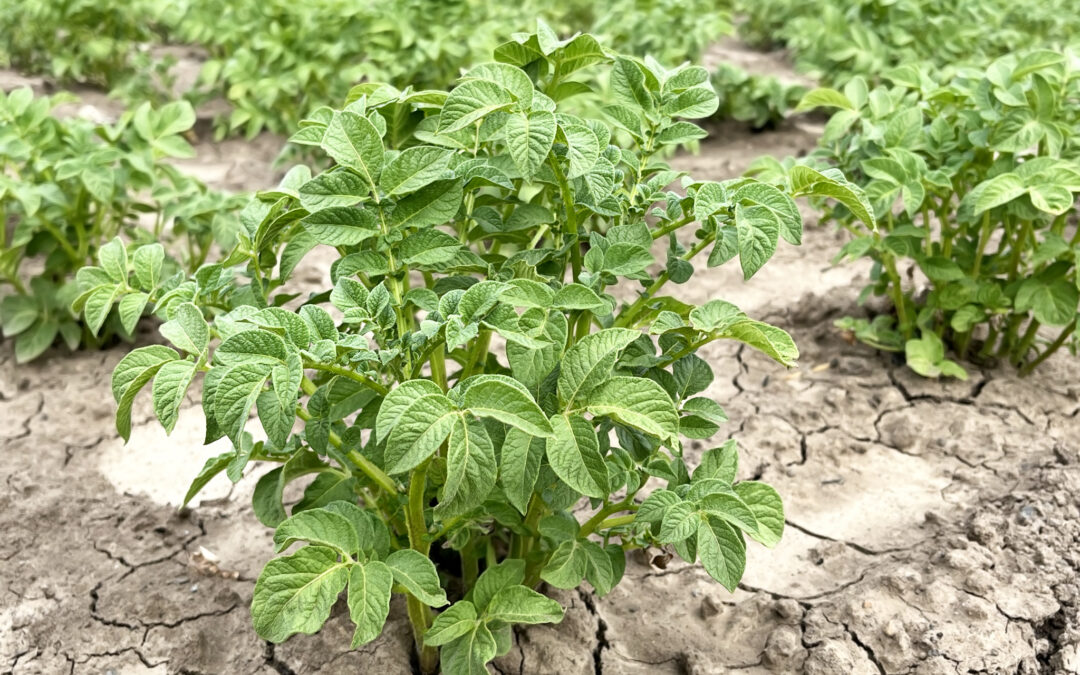
Potato Water Stress: Managing Crop Nutrition in Dry Conditions
What is the UK water situation going into May 2026?
- Up until mid-February the UK had a record-breaking run of 40 consecutive days of rain somewhere in the UK, in fact Aberdeenshire had received nearly half their annual rainfall and Reading University reported 25 consecutive days of rain making this the longest unbroken spell since 1908.
- April however continued to follow the seasonal shift we experienced in 2025 with a dry month and well below average rainfall, with England receiving just under a quarter of the long-term average monthly rainfall.
- The positive news is that as of April the UK’s groundwater tables and reservoirs have recovered from the 2025 drought and were around normal levels for the time of year.
Why potato crops may face water stress during tuber initiation
The warm and dry April has allowed potato planting to go ahead unhindered with tubers going into warmer soils, with critical tuber initiation taking place over the next month (but always read the crop not the calendar). Coinciding with the forecast for a drier than average pattern across the UK in late May into June and beyond.
Signs of water stress in potatoes
Managing water stress at this point is critical for maintaining final yield and quality, common signs that potatoes are suffering from water stress are:
- Drooping foliage
- Changes to leaf colour and texture
Check crop nutrient status with leaf tissue analysis
How water stress affects potato yield and tuber quality
- Yield reduction – estimated losses of 3.1-3.4% per day in periods of prolonged stress at critical growth stages.
- Reduced nutrient uptake, especially N, K, Ca, Mg and B
- Tuber quality issues
- Internal quality issues – decrease in starch accumulation
- Increased bruising susceptibility
- Internal ‘rust’ spot and hollow heart – associated with calcium redistribution issues
- Uneven growth and tuber cracks
- Photosynthesis decline – stomata close to reduce transpiration and in doing so cause a decline in photosynthesis and thereby growth.
Why stress followed by rewetting can damage tuber quality
The most damaging pattern is often stress followed by rapid rewetting, the crop loses bulking time during the dry period and then develops uneven tuber growth or splits when water becomes available again.
Managing water stress in the field
Without access to sufficient irrigation, stress has to be managed and mitigated as best the conditions will allow.
Support rooting before dry conditions develop
Maximising rooting at or soon after planting earlier in the season will certainly pay dividends. Once a dry period has started and is forecast to continue there are a number of actions that, if used together, can go a long way in mitigating the most damaging aspects of prolonged water deficit.
Use foliar nitrogen carefully during water stress
It can be tempting to overuse nitrogen in order to maintain a healthy green canopy. To a point a little foliar nitrogen can help BUT it is important not to overuse this tool as it can create an overactive canopy transpiring far too much water, drawing water away from the tubers and putting bulking under stress.
Foliar potassium, magnesium and boron during dry weather
Other nutrients mentioned above – K, Ca, Mg and B – also become highly immobile in the soil. Calcium you can do little about apart from ensuring you added enough to the soil before planting but potash, magnesium and boron can all be applied via foliar applications and will have beneficial effects in most cases when applied in small, regular doses.
Explore foliar nutrient options for dry conditions
How biostimulants help reduce crop stress
Finally, the addition of small, consistent doses of stress-reducing biostimulants can help greatly when used with the foliar nutrients.
The correct biostimulants can:
- Improve stomatal regulation – thereby reducing the plant’s water loss through transpiration, assisting the plant to retain more moisture within its system and maintain its internal equilibrium.
- Maintain normal nutrient mobility – nutrients need to be transported through the plant to where they are needed to work
- Boost the production of antioxidants and enzymes – these neutralise the build-up of Reactive Oxygen Species (ROS) which are highly reactive molecules containing oxygen and can damage the plant’s cells by oxidising proteins, lipids and DNA within them.
- Improve osmotic regulation – by improving osmotic balance within the cell allows the potato plant to retain more water and maintain turgor pressure and preventing wilting and therefore maintaining photosynthesis.
Combining foliar nutrients and biostimulants for crop resilience
In combination, the right biostimulants and foliar nutrients, applied in the right amounts at the right time will allow the crop to survive better and continue to produce productive and useful yields.