

Photographs taken on 22 July show potato crops managed under the OptiYield® programme retaining substantial green canopy following an exceptionally demanding period of summer weather.
The four OptiYield fields A B C and D – are all in the same locality. Although there are differences between the crops, each retains a significant amount of green leaf area capable of continuing to intercept light and support crop growth.
By contrast, a nearby potato field not grown under the OptiYield programme showed much more advanced canopy decline on the same date.
These photographs are field observations rather than the results of a controlled trial and cover nearby crops not under our control and where we do not know variety or inputs. Nevertheless, the contrast raises an important agronomic question: what helps a potato crop retain a productive canopy when it is exposed to prolonged heat and moisture stress?
An exceptionally challenging season
Potato crops across the UK have faced unusually difficult growing conditions during the summer of 2026.
According to the Met Office, England experienced its warmest June on record, with an average mean temperature of 17.1°C nearly 3°C above the long-term average. A provisional temperature of 37.7°C was recorded in Norfolk on 26 June, setting a new UK June maximum-temperature record. By 15 July, England’s mean temperature for the summer was running 2.4°C above the seasonal average.
For a cool-season crop such as potatoes, these conditions can place considerable pressure on both canopy and tuber development. Research shows that high temperatures can accelerate leaf senescence, reduce chlorophyll content and restrict photosynthesis. Tuber development can be particularly sensitive to heat, even where the crop continues to produce foliage.
Observations of potato canopies withstanding heat and drought.
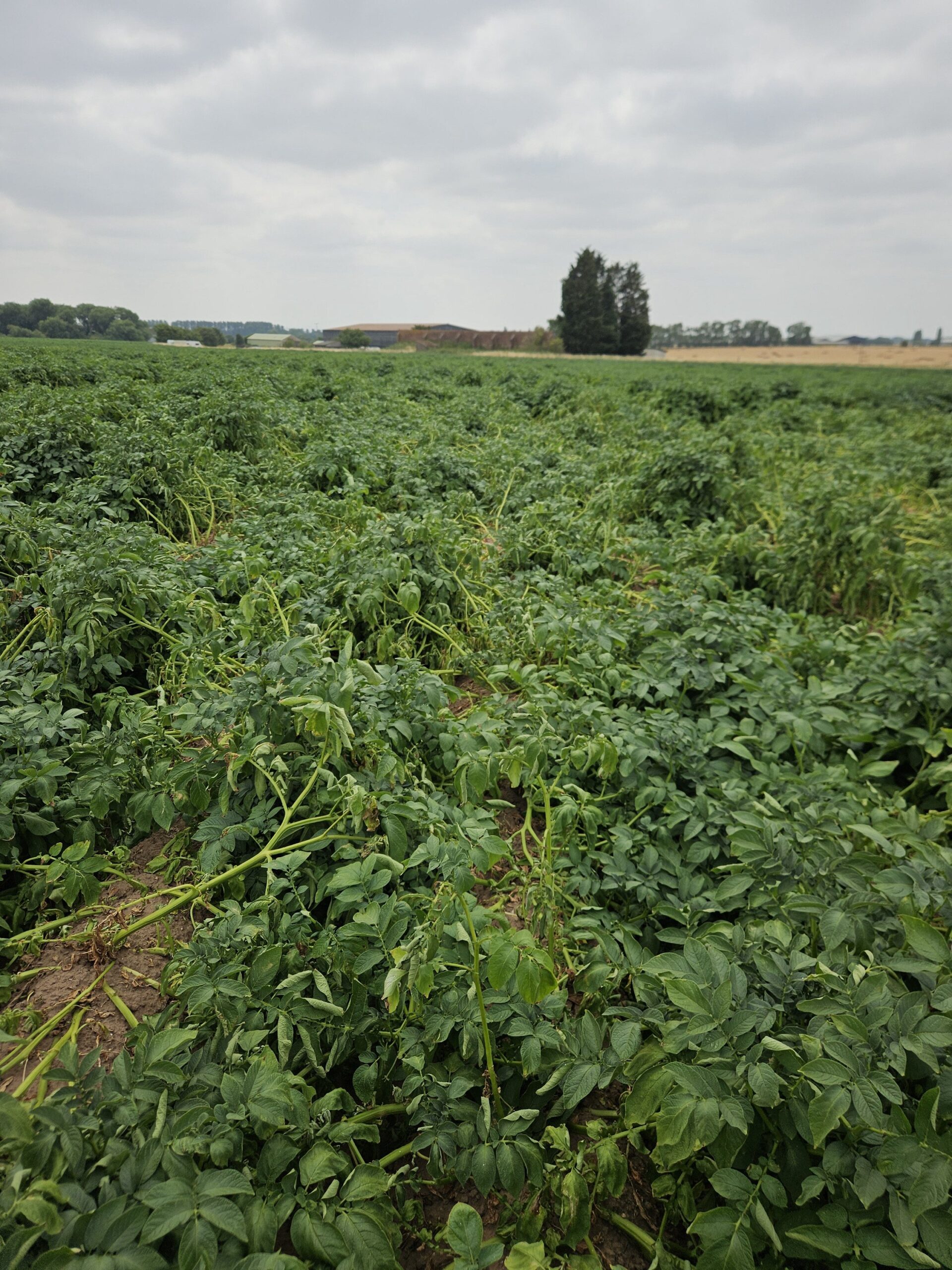
Field A
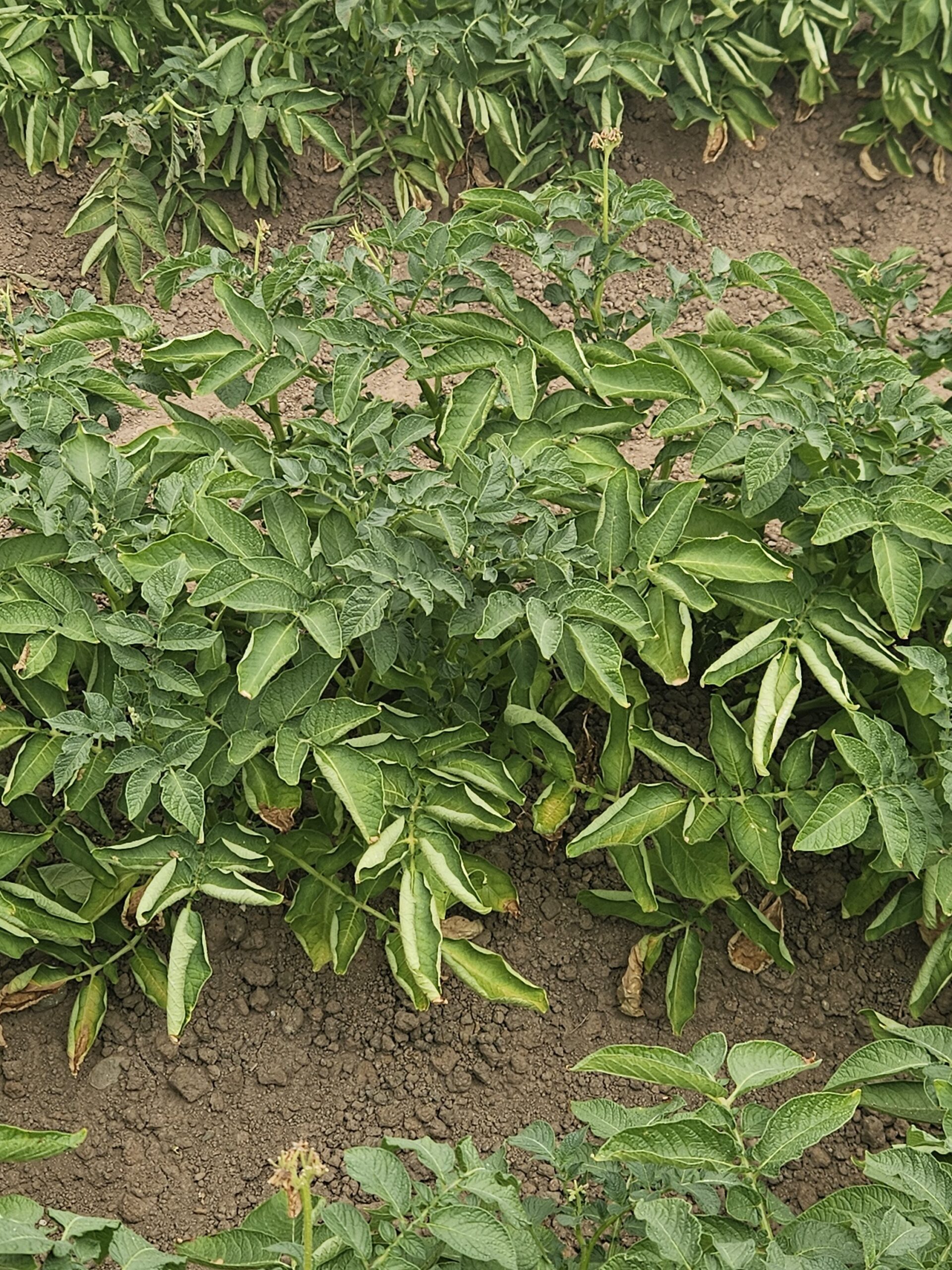
Field B
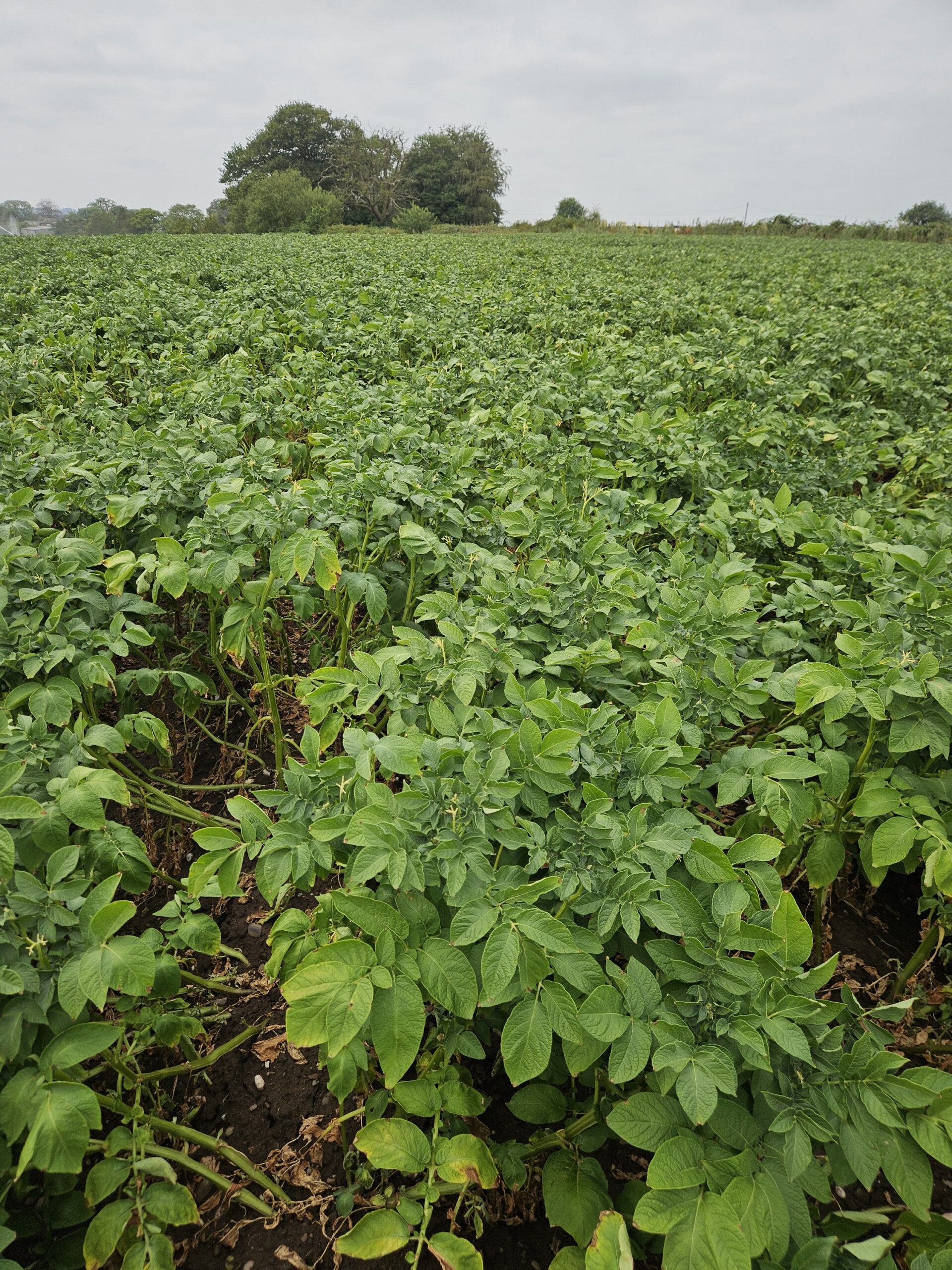
Field C
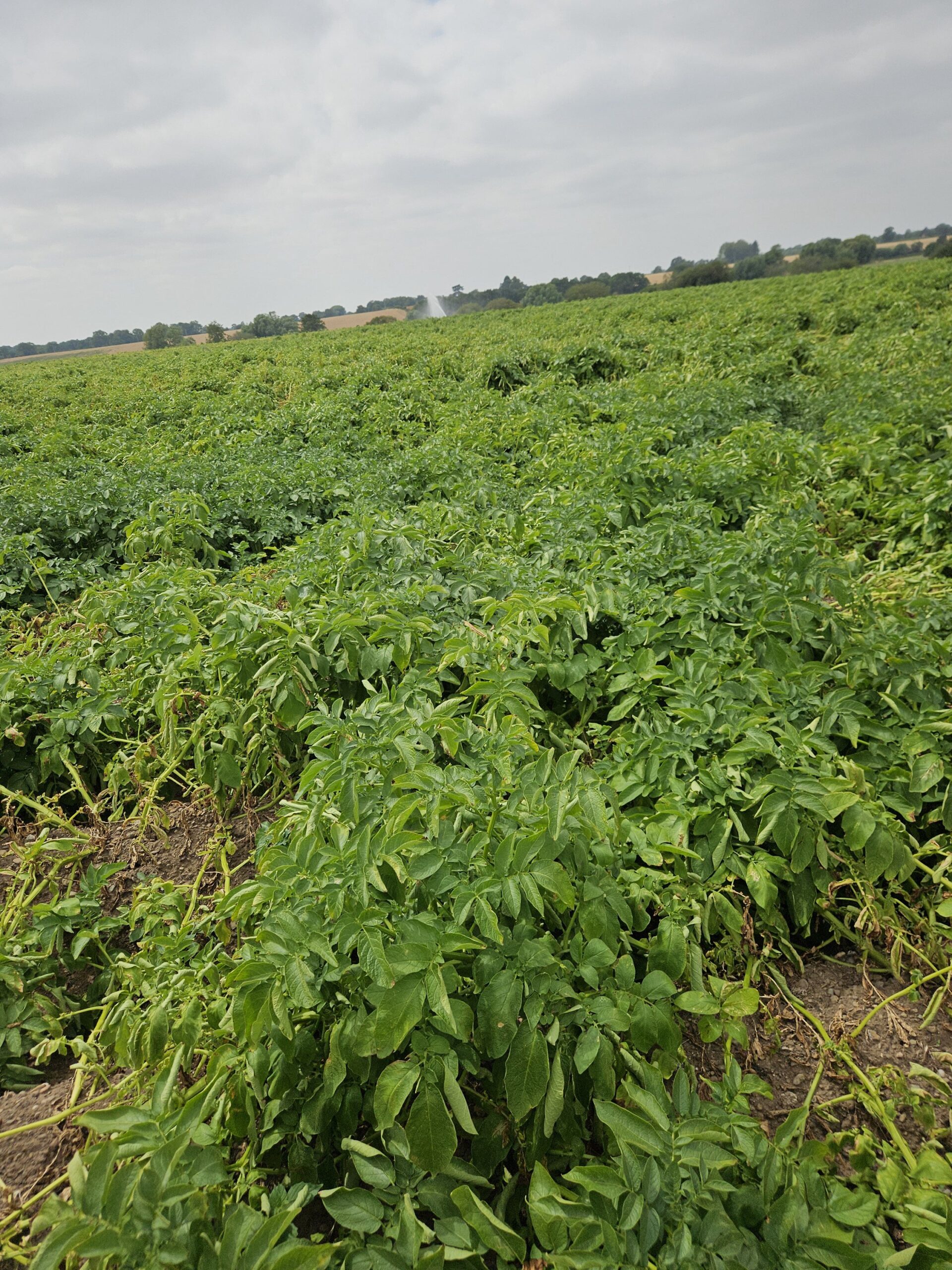
Field D
- Field A 22 July: An OptiYield-managed potato crop retaining a dense, predominantly green canopy following periods of exceptionally high summer temperatures.
- Field B 22 July: Leaf rolling indicates that the crop has experienced stress, but substantial green leaf area remains.
- Field C , 22 July: Broad canopy cover remains across this OptiYield-managed field during the tuber-bulking period.
- Field D, 22 July: Green canopy is retained across much of the OptiYield field despite challenging summer conditions.
- Local comparison field E, 22 July: A nearby crop not managed under the OptiYield programme showing considerably more advanced canopy decline. Field differences mean this should be treated as contextual evidence, not a controlled comparison.
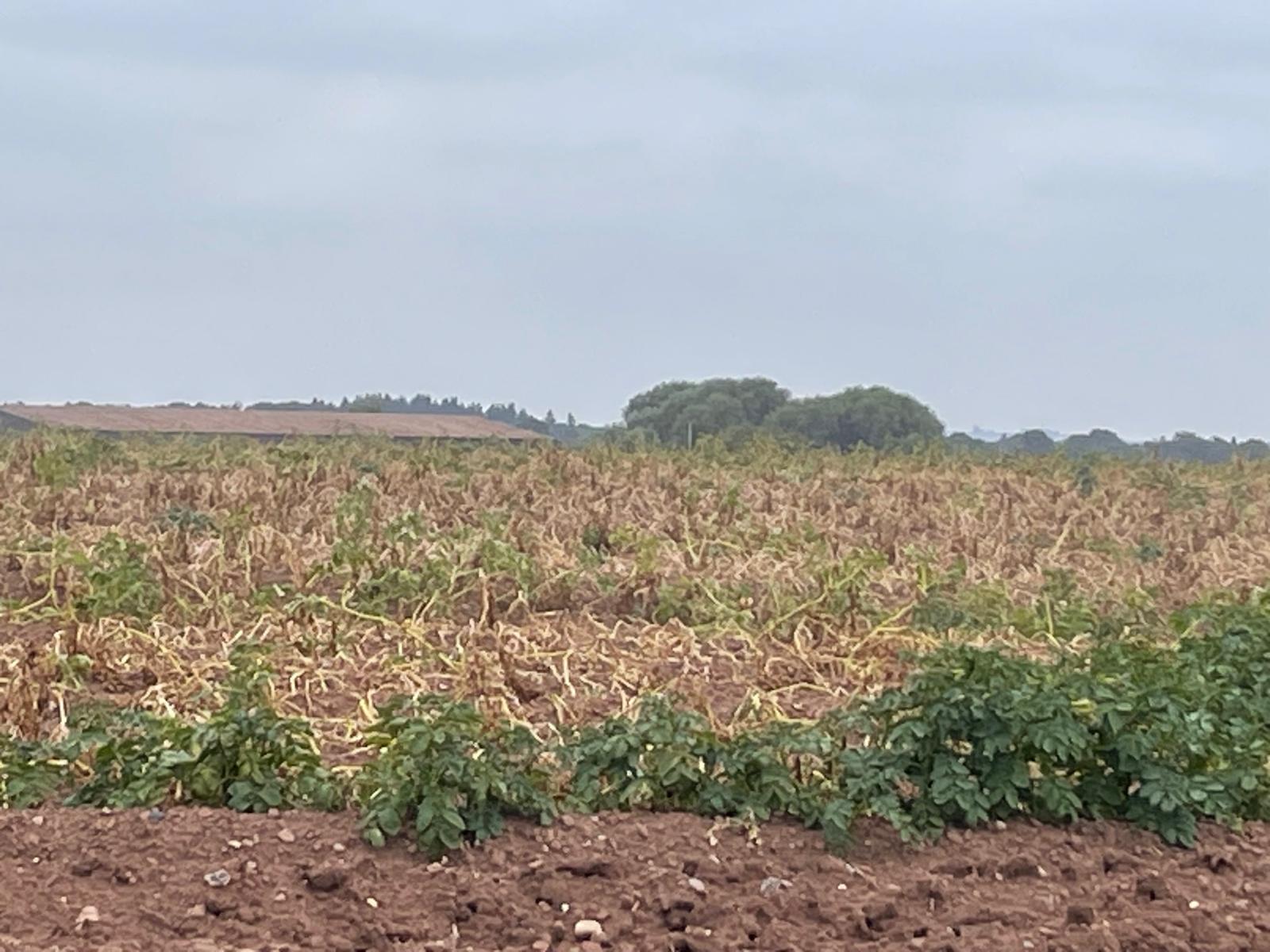
Field E
Why maintaining a green canopy matters
The potato canopy is the crop’s energy-producing system. Green leaves intercept sunlight and use it to produce the carbohydrates that support tuber growth.
Once leaf area is lost through heat stress, drought, nutrient deficiency, disease or premature senescence, the crop has less capacity to intercept light and continue building yield. Maintaining canopy for longer does not guarantee a higher marketable yield, but it preserves the crop’s opportunity to continue photosynthesis and support tuber bulking.
The OptiYield fields photographed on 22 July were not completely unaffected by the conditions. Leaf rolling can be seen in parts of the Field B crop, indicating a response to heat or moisture pressure. However, the crop still retains considerable green leaf area rather than showing widespread canopy loss.
This distinction is important. Crop resilience does not necessarily mean that plants show no signs of stress. It means helping the crop remain functional and recover more effectively when stressful conditions occur.
Supporting the whole crop, not responding to one symptom
OptiYield is a full-lifecycle crop nutrition and plant health approach. It is designed to support the crop from establishment through canopy development, tuber initiation and bulking, rather than relying on a single product or a late response once visible stress has appeared.
The programme brings together:
- Detailed soil analysis to identify nutrient availability, imbalances and possible restrictions to uptake
- Field- and variety-specific crop recommendations
- Nutritional inputs targeted to important growth stages
- Root and soil biological support
- Biostimulants selected to help crops cope with periods of environmental stress
- Leaf and petiole analysis to monitor the crop during the season
- Foliar nutrition to respond more precisely to changing crop requirements
This integrated approach is particularly relevant during hot and dry conditions. A crop’s response is influenced by more than the amount of water available. Root development, soil condition, nutrient availability, canopy structure, plant health and the timing of inputs all affect how effectively the crop can continue functioning.
Irrigation remains extremely important and some of the photographed fields may have received irrigation. However, water alone cannot correct every limitation. If rooting is restricted, nutrients are unavailable or the canopy is already deteriorating, the crop may still struggle to use the available water effectively.
Encouraging field observations
Across Fields A, C and D the photographs show broad areas of green canopy remaining on 22 July. Field B shows more visible stress, including leaf rolling, but still retains a substantial amount of living green tissue.
The nearby non-OptiYield field provides useful local context because it was exposed to broadly the same regional weather. Its canopy appears to be at a much more advanced stage of decline, with extensive browning and loss of green leaf area.
It would not be appropriate to attribute this difference solely to the OptiYield programme without matching information on variety, planting date, irrigation, soil type, crop maturity and management. Nor can a photograph alone confirm the rate of photosynthesis or predict final yield.
However, the observations are consistent with the objective of the OptiYield approach: to establish a well-rooted, appropriately nourished crop and maintain its ability to function through periods of environmental pressure.
The final measure will be at harvest
A green canopy is not the final result. The real assessment will come from marketable yield, tuber size distribution, dry matter, quality and crop value at harvest.
These July observations nevertheless provide an encouraging indication that the OptiYield crops have retained the leaf area needed to continue intercepting light and supporting tuber development during a particularly difficult summer.
As increasingly variable weather places greater pressure on potato production, crop management will need to focus not simply on applying more inputs, but on establishing resilient crops, identifying limitations early and supplying the right support at the right stage.
The objective is not to prevent every sign of stress. It is to help the crop remain green, active and productive for as long as possible.