OPTIYIELD CROP PROGRAMMES
OptiYield Programmes: Soil Analysis, Crop Recommendations and Nutrition Plans
OptiYield provides growers with a deeper and more informed soil analysis than a standard test, assessing a wider range of nutrient information and factors that can affect nutrient availability.
OptiYield® is driven through software algorithms that combine unique soil analysis methods with crop-specific agronomics and novel biotechnology. From this analysis, Emerald Research can develop a full crop fertiliser and nutrition plan tailored to the crop, variety and key growth stages, helping growers target inputs more accurately through the season.

Soil Analysis Results Report
Best for: growers who want to understand what the soil can supply and where nutrients may be restricted.
Includes:
- Soil texture
- Soil characteristics
- Cation balance and antagonism
- Soil fitness factors
- Phosphate availability
- Cationic nutrient availability
- Minor and micronutrient availability
- Notes and observations
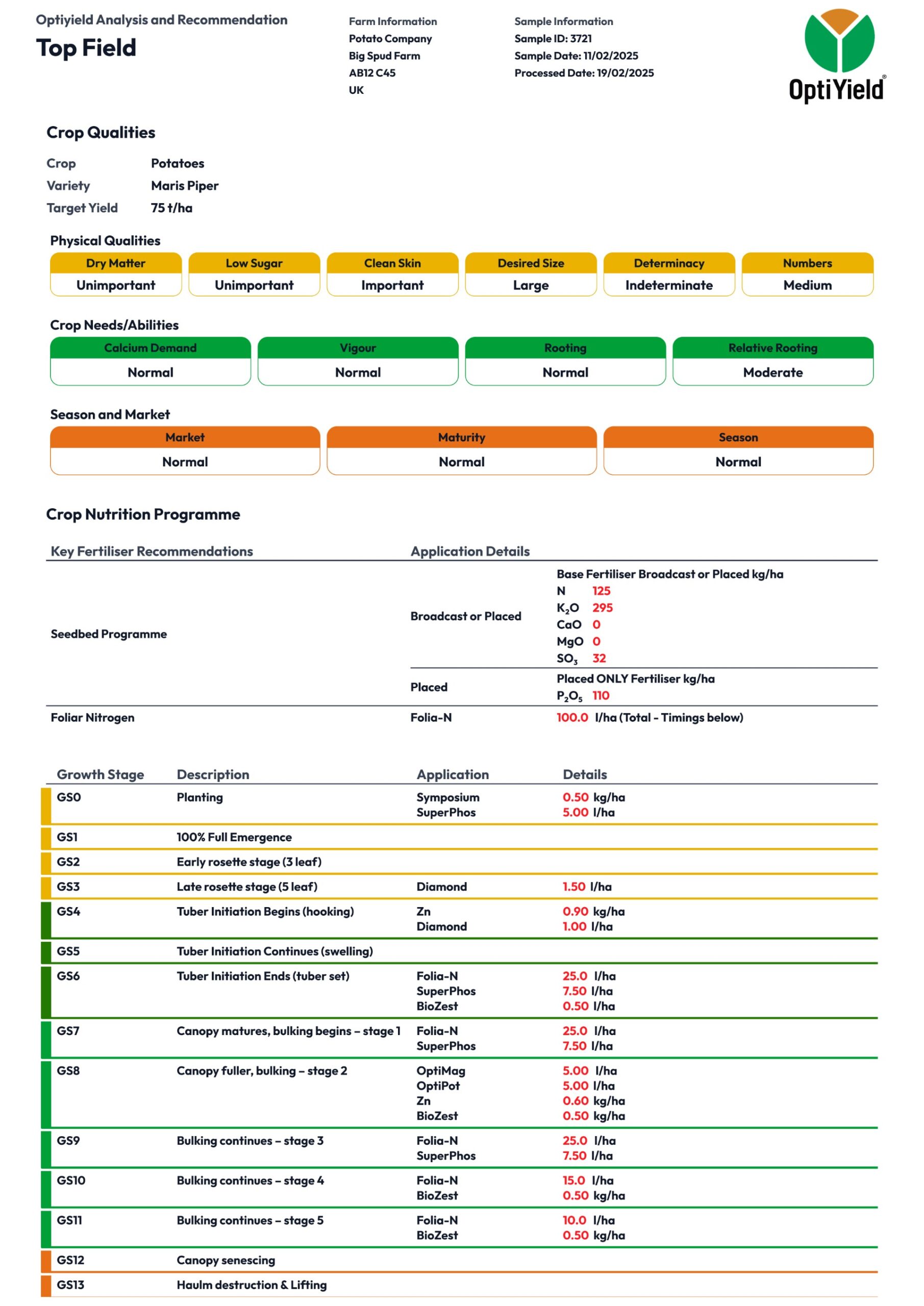
Full Lifecycle Nutrient Management Plan
Best for: growers who have completed OptiYield soil analysis and want field-specific crop recommendations based on soil results, crop requirements and variety.
Includes:
- OptiYield soil analysis results
- Crop and variety details
- Desired tonnage and quality parameters
- Growth-stage recommendations
- Base fertiliser recommendations
- Phosphate strategy
- Foliar nutrient recommendations
- Biostimulant and biological product timings
- Notes on nutrient lock-up or antagonism
Important note: the Full Lifecycle Nutrient Management Plan can only be produced following OptiYield soil analysis, as the recommendations are based on field-specific soil results.

OptiYield Core
Best for: growers who want a crop nutrition plan but are not starting with OptiYield soil analysis.
Includes:
- Crop-stage nutrition plan
- Key growth-stage timings
- Nutrient and biostimulant recommendations
- Product choices from the OptiYield range
- Practical programme for agronomists, farmers and growers
Which OptiYield programme is right for you?
| Option | Best for | What it is based on | What the farmer receives |
|---|---|---|---|
| Full OptiYield Programme | Growers wanting the most field-specific recommendation | OptiYield soil analysis, crop details, yield target, variety, soil nutrient availability and crop demand | Soil Analysis Results Report plus Full Lifecycle Nutrient Management Plan |
| OptiYield Core | Growers wanting a practical crop nutrition programme without starting from full soil analysis | Crop type, key growth stages, known crop requirements and OptiYield product knowledge | A ready-to-go crop nutrition plan targeting key growth stages |
| In-season monitoring | Growers who want to check if the crop is on track during the season | Leaf tissue or petiole analysis | Nutrient status check and corrective recommendations where needed |
How the full OptiYield programme works
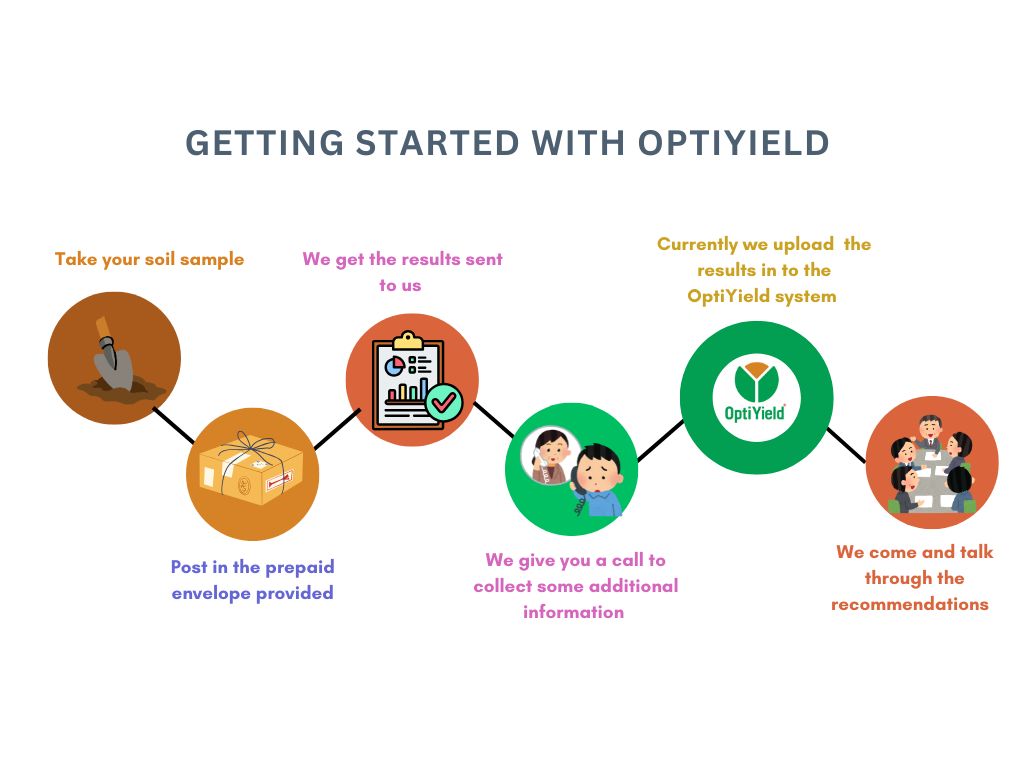
1. Soil samples are taken
Order your OptiYield soil sampling kit from us here and follow the step-by-step instruction and post to the laboratory using the Freepaid envelope.
2. Soil analysis is completed
The soil is assessed for key characteristics, nutrient levels, availability and factors that may restrict uptake.
3. OptiYield System interprets nutrient availability
The system considers relationships between nutrients, soil condition, phosphate availability and crop demand.
4. A crop recommendation is created by the OptiYield System
After collecting some further information from you :
- Crop and variety
- Farm availabale fertiliser and any manures to be applied (type and tonnage)
- Tonnage expectationa nd end market
The data is turned into a practical Full Lifecycle Nutrient Management Plan.
5. The plan guides applications through the season
Recommendations are linked to crop growth stages and may include fertiliser, foliar nutrients, biostimulants and biological inputs.
Why OptiYield goes beyond a standard soil test
| Standard soil test | OptiYield full programme |
|---|---|
| Shows nutrient levels | Interprets nutrient availability |
| Gives useful baseline information | Identifies potential restrictions to uptake |
| Usually needs separate interpretation | Produces a practical crop recommendation |
| Often focuses on P, K, Mg and pH | Looks at wider soil and nutrient interactions |
| Does not usually provide a full crop-stage plan | Links recommendations to key growth stages |
The Soil Analysis Results Report helps growers understand soil characteristics, nutrient availability, phosphate behaviour, cation balance and potential limitations to uptake.

The Full Lifecycle Nutrient Management Plan turns the soil analysis into crop-stage recommendations, including fertiliser, foliar nutrients, biostimulants and biological inputs.