
Why Potato Root Development Matters
Potato root development is one of the most important foundations of crop health. A strong, active root system helps the crop access water, take up nutrients, anchor itself in the soil and cope with stress during the growing season.
The first few weeks after planting are particularly important. This is when the developing crop starts to build the root mass that will support early vigour, canopy development, nutrient uptake and resilience later in the season.
How Strong Roots Support Crop Health
Strong, healthy and productive potato crops start with the formation of a root mass that can sustain crop health and vigour throughout the growing season.
- Anchorage and stability – Strong, well-developed roots physically anchor potato plants, helping reduce lodging and losses during early growth.
- Water uptake – A healthy root system allows young crops to access soil moisture readily. This is vital during the critical establishment phase, but also essential during drought conditions, such as those experienced this year.
- Nutrient uptake – Roots explore the soil for essential nutrients like phosphate (which is immobile in soil), nitrogen and other nutrients and micronutrients needed in early development to support leaf growth and branching.
- Soil interactions – Roots release exudates that feed soil microbes, which in turn play an important role in nutrient recycling (e.g., breaking down ammonium into nitrate, a form of nitrogen that crops can absorb).
- Resilience to stress – A deeper, more extensive root system helps crops tolerate drought, compaction and early pest and disease pressures.
The First 30 Days After Planting
How can you ensure your crop maximises its rooting potential in the first thirty days?
The first 30 days after planting are a key window for supporting root development. At this stage, the crop needs access to moisture, oxygen and available nutrients, particularly phosphate, which is relatively immobile in the soil.
Supporting root growth early helps the crop establish more quickly, build canopy more evenly and improve its ability to access water and nutrients later in the season.
Using Microbial Biostimulants to Support Root Growth
Research over the last decade has shown that synergistic microbial formulations, such as Symposium, can support the root zone by introducing selected species and strains of beneficial plant growth-promoting rhizobacteria, fungi and organic biostimulants.
These microbial inputs are designed to work around the developing root system, where they help support nutrient availability, soil biological activity and early crop vigour.
How Symposium Supports the Root Zone
Symposium quickly colonises the soil and root zone, supporting nutrient availability through the organic acids and enzymes released by microbes. These compounds help solubilise nutrients such as phosphorus, improving early nutrition around the devloping crop.
In addition, the beneficial fungi within Symposium help build systemic crop resilience from day one, enabling plants to withstand the challenges of early spring.
Support Root Development from Planting
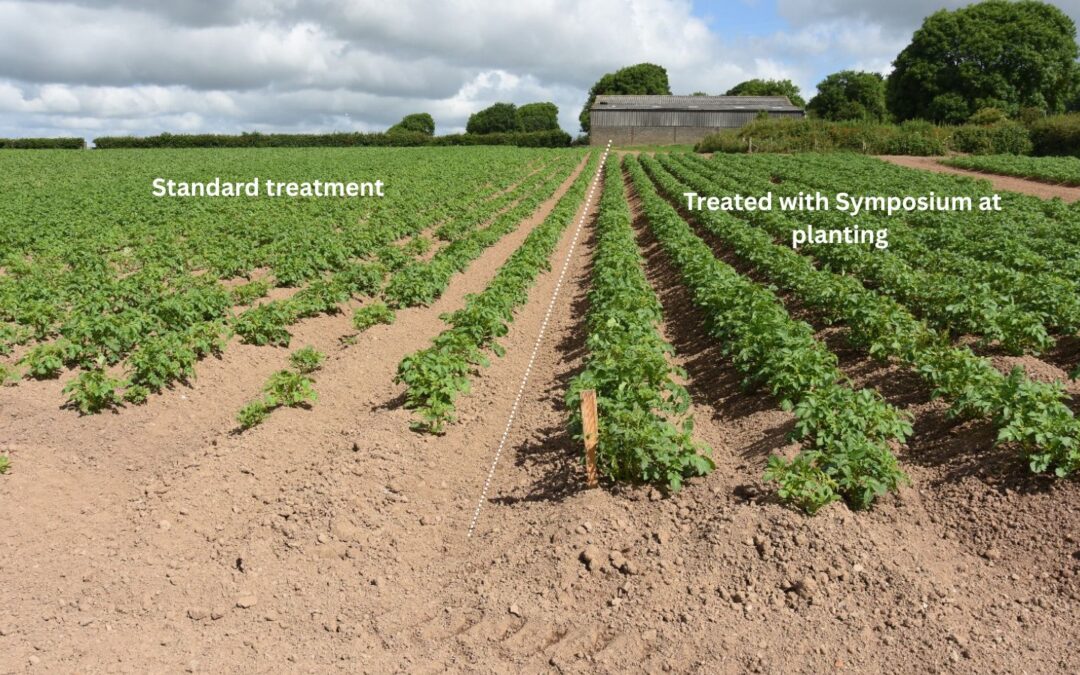
Strong roots are built early. Symposium microbial biostimulant is applied at planting to introduce beneficial rhizobacteria, fungi and organic biostimulants into the root zone, supporting early root development, nutrient availability and crop resilience
Related Reading:
Microbes and Potatoes: The Key to Healthier Soil, Stronger Roots, and Drought Resilience
Why Microbial Mixes at Planting Are About Risk Management, Not Just Yield
Symposium Launched as Emerald Research Rebrands Consortium-Plus
Using Soil Analysis to Plan Nutrition and Inputs for Potatoes