
High Nutrient Use Efficiency and Foliar Applications
Making better use of expensive fertiliser inputs
Nitrogen has always been one of the most important crop inputs but in recent years it has also become one of the most closely scrutinised. As fertiliser prices remain high and pressure grows to improve both economic and environmental performance, the focus has shifted from simply applying nutrients to using them more efficiently.
That is where nutrient use efficiency becomes so important.
Why nutrient use efficiency matters
Nutrient use efficiency is, at its simplest, a measure of how much of the applied nutrient is actually taken up and used by the crop. The higher the efficiency, the more value the grower gains from every kilogram applied. The lower the efficiency, the greater the proportion that is lost, tied up or left unavailable at the point the crop needs it most.
For an expensive input such as nitrogen, that matters enormously. Improving efficiency is not just good agronomy — it is a direct route to better return on investment.
How foliar application changes nutrient delivery
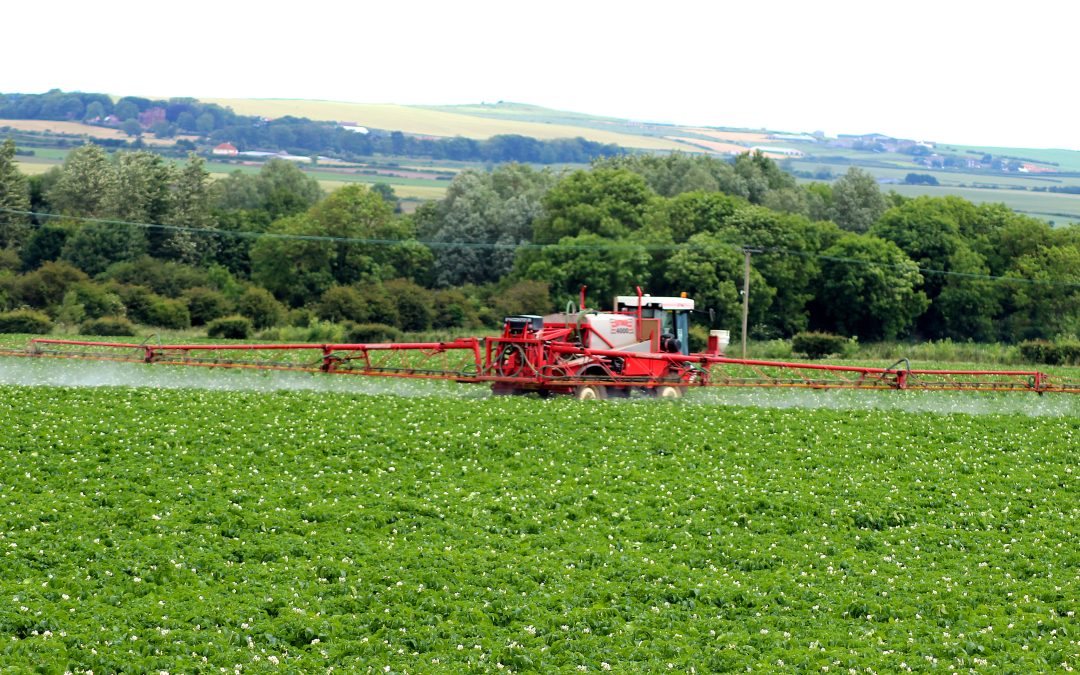
One of the main reasons foliar nutrition is relevant to this conversation is that it changes how nutrients are delivered to the crop. Rather than relying entirely on movement through the soil and interception by the roots, foliar feeding delivers nutrients directly onto the leaf.
That can be particularly valuable when soil conditions are less than ideal. In dry weather, nutrient movement through the soil can be restricted. In cold soils, root activity may be slower. In wet conditions, losses from soil-applied nitrogen may become a concern. Foliar application offers a way of maintaining nutrient supply with less reliance on perfect soil conditions.
Why timing matters for nutrient use efficiency
Of course, nutrient use efficiency is not just about the route of application. It is also about timing. Crops do not require nutrients at a constant rate throughout the season. Demand rises sharply at certain growth stages and matching supply to that demand is one of the best ways to improve efficiency.
This is where foliar nutrition can make a meaningful contribution. Smaller, targeted applications allow growers to respond more precisely to crop need, rather than committing all nutrition through broader, less flexible application timings. Where nitrogen is costly, that ability to fine-tune applications becomes especially valuable.
Check crop nutrient status with leaf tissue analysis
Better use of a costly nitrogen input
None of this suggests that foliar nitrogen replaces all conventional nutrition. Most crops still require a robust base fertility programme. But foliar application can play an important role in improving the efficiency of the overall strategy, especially where growers want to support crop demand without relying solely on large soil-applied dressings.
In practical terms, high nutrient use efficiency means making sure an expensive input delivers the greatest possible agronomic return. Foliar application helps support that goal by improving precision, supporting uptake when soil conditions are difficult and allowing nutrition to be better matched to crop demand.
At a time when every unit of nitrogen has to work harder, that makes foliar application an increasingly important part of efficient crop nutrition.
Related reading:
Fertiliser Prices Are Rising Again
Foliar Application – Come Rain or Shine
Heading into May: should we be talking about water stress?
Are There Really Any Disadvantages to Foliar Applications?