
Building Potato Crop Resilience
Building Potato Crop Resilience in a Difficult 2025 Season
New Ryden Farm, South Somerset | D Vaux & Sons
After one of the driest growing seasons in recent memory, D Vaux & Sons at New Ryden Farm in South Somerset have been assessing the impact of their first year using the OptiYield programme on their potato crop.
The farm, run by Philip Vaux and family, grows a range of potato varieties, including crisping crops, across a mix of owned and rented land. Much of the potato area is unirrigated, making crop resilience, soil structure and nutrient availability especially important in challenging seasons.
In 2025, with only around 40 mm of rain between the beginning of March and the end of August, the crop was placed under significant drought stress.
Moving from Soil-Loaded Inputs to Crop-Focused Nutrition
Historically, the farm had relied on solid fertilisers, foliar seaweed products and later-season liquid nitrogen. For the 2025 season, Philip made changes to the programme, incorporating more products based on the OptiYield approach.
The aim was clear: reduce reliance on conventional fertiliser applied at planting or mid-season, while improving the crop’s ability to access nutrition when conditions became difficult.
As Philip explained:
“We want to be able to try and reduce the amount of fertilisers that we’re using at planting or at mid-season.”
This approach is particularly relevant where potato crops are grown on rented land. Rather than investing heavily in the soil with the hope that the crop can access nutrition later, the programme focuses on feeding the crop according to its needs throughout the season.
Supporting Establishment with Symposium and SuperPhos
At planting, the farm used Symposium alongside SuperPhos to support early rooting, establishment and nutrient availability.
Symposium, a multi-microbial product applied to the seed at planting, encourages vigorous root growth and early establishment and was used in place of the farm’s usual Amistar application on certain fields. Philip explained that Amistar had previously been used on fields where fodder beet and potatoes were in the rotation, mainly to help reduce issues such as rhizoctonia.
Reflecting on this season, he noted that Symposium had not been used on fields without root crops in the rotation, but that this may change in future.
“We’ve not used Symposium on fields where there’s no roots in the rotation, but I think we probably should have done.”
This was particularly noticeable on a block of sharper sandy land, where Symposium had not been used and the crop was expected to produce a lighter yield.
Coping with Drought on Mostly Unirrigated Land
The extreme lack of rainfall had a major impact on crop development. Most of the farm’s potato ground is unirrigated, with only one block able to receive water. That irrigated block performed well considering the conditions, but the rest of the farm had to rely on soil management, organic manures and crop resilience.
The business uses farmyard manure, pig muck and chicken litter, particularly where crisping varieties are grown and skin finish is less critical. This helps support soil structure, organic matter and rooting depth.
Strong soil structure underneath the ridges was a key factor observed during the visit. Better rooting depth appeared to help the crop access moisture deeper in the profile, which was especially important in a year when placed fertiliser could remain unavailable due to dry soils.
Results in the Field
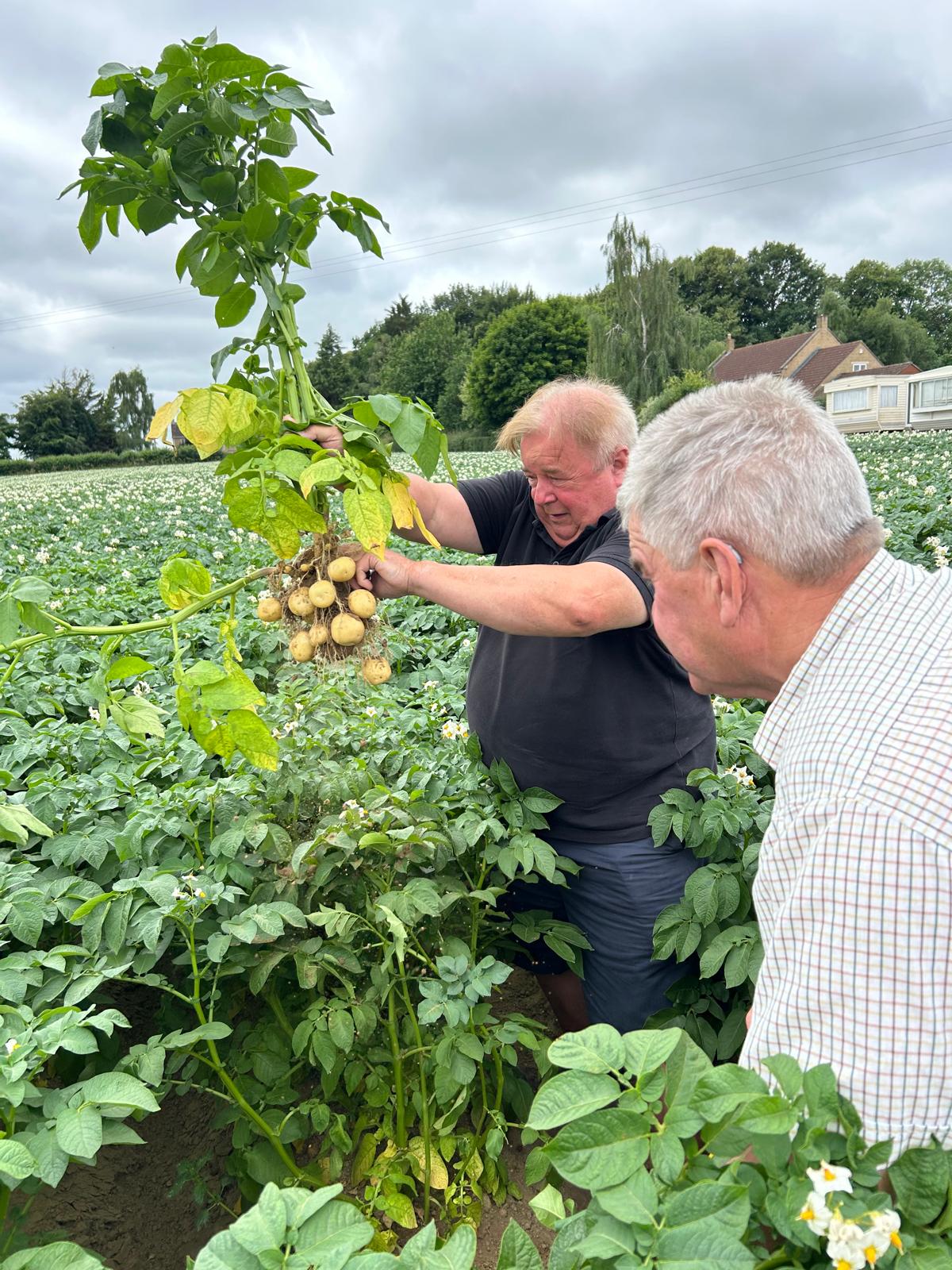
Despite the season, the crops looked well and produced a reasonable sample. Philip reported that varieties such as Taurus and Tamino had produced numbers, although size was limited by the lack of rain.
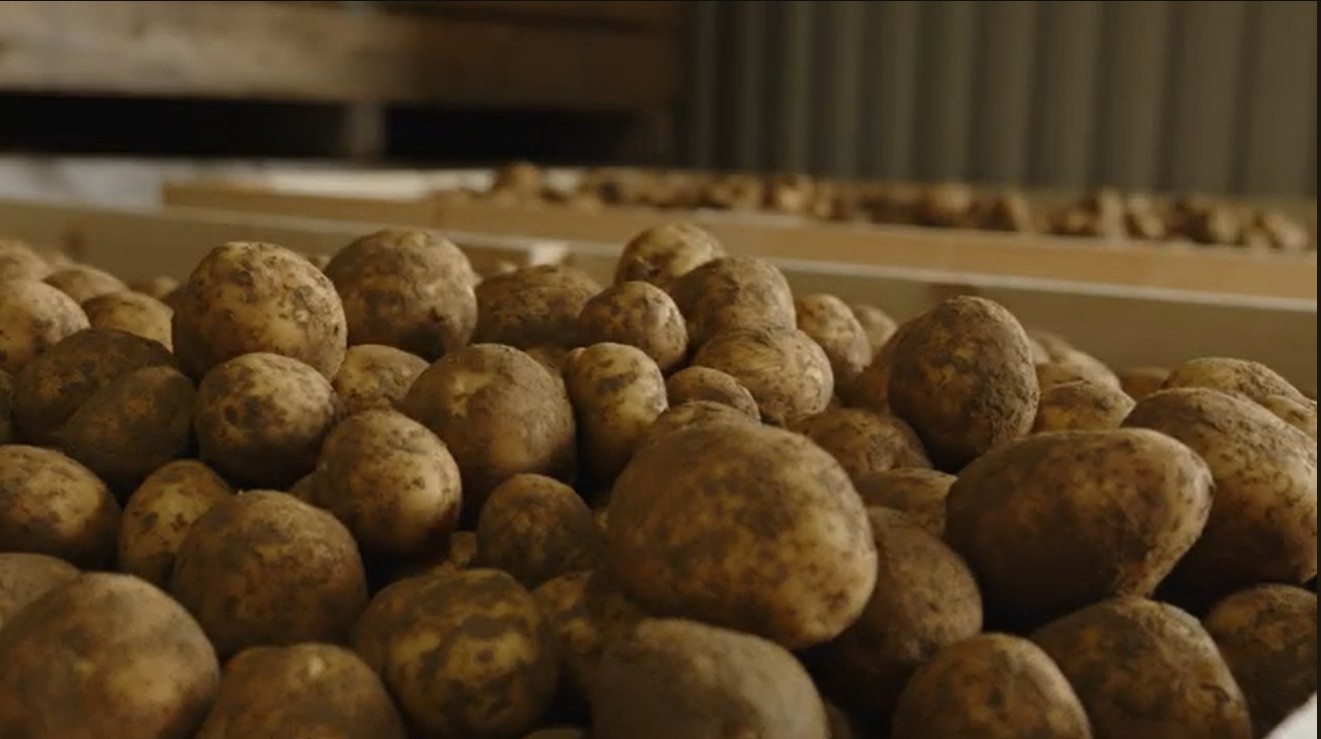
When looking at Amanda coming in from the field, the sample was described as even, with some smaller tubers due to the dry conditions, but not excessive undersize.
Philip reflected:
“If we hadn’t used your products, who’s to say? I would have said the potatoes probably would have been a lot smaller.”
Given the season, the crop was described as “fair to middling” — a result that Philip agreed was positive considering the conditions.
“Fair to middling is probably a bit of a result given this year. It certainly is.”
Avoiding a Disaster Year
For Philip, the biggest conclusion was that the programme had helped reduce the impact of a very difficult growing season.
The OptiYield programme included establishment support at planting, followed by targeted micronutrients, foliar nitrogen, foliar phosphate, foliar potash and stress-reducing seaweed applications later in the season.
This flexibility allowed the programme to respond to crop demand and seasonal pressure, rather than relying solely on soil-applied nutrition.
Philip said:
“The programme that we’ve used this year would have certainly helped. Had we not used it, I dread to think what we would have had. It would have been a complete disaster. I think the disaster has been avoided by putting on what we’ve done so far this year.”
Looking Ahead
Looking to next season, the farm plans to continue growing potatoes while working to keep inputs as efficient as possible.
Rising seed costs and pressure on margins mean that savings need to be found without compromising crop performance.
“We’re going to be carrying on growing potatoes and aim to try and improve on inputs, keeping the inputs down as low as possible because the returns don’t go up to correspond with it.”
In a good year, Philip would be pleased with crisping yields of around 17 to 20 tonnes per acre. Anything above 20 tonnes per acre would be considered a bonus.
The challenge, as always, is that no two seasons are the same. Following a very wet and cloudy year with an exceptionally dry one highlights the importance of building flexibility and resilience into potato nutrition programmes.
For D Vaux & Sons, the first season using the OptiYield programme has shown that targeted crop nutrition, microbial support and stress mitigation can play an important role in protecting yield potential, particularly when weather conditions are working against the crop.
Key Takeaway
In an exceptionally dry season, with only around 40 mm of rain from March to late August, the OptiYield programme helped D Vaux & Sons support crop establishment, maintain rooting and reduce stress in mostly unirrigated potato crops. While yields were limited by the drought, the programme helped avoid what could have been a much more damaging season.